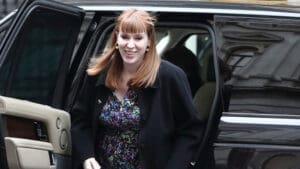
Angela Rayner has broken cover to urge Sir Keir Starmer to push ahead with a blanket ban on social media for children under the age of 16, intensifying pressure on a prime minister already wrestling with one of the most politically charged decisions of his premiership.
The former deputy prime minister told Sir Keir to “just make a decision and do it”, arguing that the case for prohibiting under-16s from accessing platforms such as Instagram, TikTok, Snapchat and X had become “so clear” that further delay was indefensible. Her intervention, made on Alastair Campbell’s The Rest Is Politics podcast, lands as Whitehall closes a government consultation on Tuesday that has been weighing an Australian-style ban on under-age social media use.
For Britain’s small and medium-sized businesses — particularly the legions of owner-managers who have come to depend on social platforms as their shop window, sales channel and marketing department rolled into one — the stakes could scarcely be higher. Any move to restrict access for under-16s would force a wholesale rethink of age-assurance technology, advertising targeting and content moderation, with costs that will land disproportionately on smaller operators.
A cabinet split, an open consultation and a prime minister in two minds
Although Westminster speculation is mounting that Sir Keir will eventually back a full ban as a piece of “low-hanging political fruit”, Labour is visibly divided over the proposal. Andy Burnham, the Greater Manchester mayor, and Wes Streeting, the health secretary, are both said to have cooled on a blanket prohibition, favouring tougher functional regulation over a hard age cut-off.
The doubts are being fed by early evidence from the southern hemisphere. Five separate studies have suggested that at least 60 per cent of Australian children aged under 16 are either ignoring the ban outright or have already found ways around it. Data published by the Australian regulator confirms that between 60 and 64 per cent of children still using the major platforms reported no action being taken against their accounts, a figure detailed in the official eSafety Commissioner’s social media age restrictions update.
Mr Campbell, Tony Blair’s former director of communications, told the podcast he could not understand the government’s hesitation. “I don’t understand why the government isn’t just doing it in relation to stopping social media till you’re 16,” he said. “I think the country’s kind of decided on this, and yet we’ve just got this bloody, seemingly never-ending process going on.”
Ms Rayner agreed, framing the delay as symptomatic of a wider drift. “It just makes people feel ‘just make a decision and do it’,” she said. “Why can you not just make a decision when it seems so clear that that’s what you need to do? It’s this active state that is exactly what we need to be.”
Bereaved families urge caution before any announcement
On Tuesday, Sir Keir is scheduled to meet parents who have lost children as a result of their experiences online. But campaigners have warned the prime minister against a politically expedient announcement that runs ahead of the evidence.
Ian Russell, whose daughter Molly took her own life aged 14 after being inundated with online content depicting self-harm and suicide, said: “Any government announcement now would make a mockery of the consultation. They need to see the results before making up their mind. They also need to follow the evidence and go beyond a ban if they wish to be effective rather than performative.”
The alternative model gaining ground inside Whitehall is a ban on so-called “functionalities” — a more surgical approach that would oblige social media firms to switch off features such as endless scrolls, recommender algorithms aimed at children, autoplay, livestreaming and “streaks” that reward daily logins. That approach would chime with the direction already set out in Ofcom’s tougher rules on harmful algorithms aimed at young users under the Online Safety Act. The regulator’s own protection of children codes of practice already require platforms to deploy more than 40 practical safety measures during 2026, including age assurance and content controls covering suicide, self-harm and eating disorders.
What the policy means for british business
Polling suggests parental and backbench appetite for an Australian-style ban remains strong, and at least one Whitehall source briefed The Sun on Sunday that the policy was “free and popular”, the kind of legacy announcement Sir Keir could realistically push past restive Labour MPs.
For SMEs, the implications cut well beyond Westminster theatre. Compliance costs flowing from the Online Safety Act are already reshaping how UK businesses operate online, with fines of up to 10 per cent of global turnover concentrating minds in boardrooms. A statutory ban would extend that compliance perimeter sharply, potentially curtailing advertising inventory aimed at family audiences and forcing smaller direct-to-consumer brands to redraw acquisition strategies built around teen-skewed platforms.
Sir Keir has consistently maintained an “open mind” on the question, pointing to the genuine benefits children derive from access to the internet and stressing his preference for stripping out addictive design features rather than banning access outright. Crucially, the government has already legislated for the flexibility to introduce any agreed change, up to and including a full ban, without bringing fresh primary legislation before Parliament.
“We’ll go through the consultation, but I think I’ll be absolutely clear: things will not stay as they are,” the prime minister said. “This is going to change. I don’t think the next generation would forgive us if we didn’t act now.”
Whether that change arrives as a hard age cap or a more nuanced architectural fix, business owners would be wise to start war-gaming both scenarios now. The political pressure from within Sir Keir’s own cabinet suggests a decision is no longer a matter of if, but when — and how broadly the net will be cast.
Read more:
Rayner urges Starmer to ban social media for under-16s as labour splits over Australian model