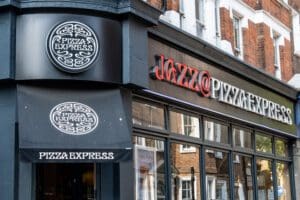
Profits at Britain’s 100 biggest restaurant groups have fallen by almost half in the past year as hospitality businesses grapple with mounting employment costs.
The country’s largest restaurant companies by turnover, which include Pizza Express and Five Guys, together generated £204 million in profits, according to analysis by the accountancy firm UHY Hacker Young.
The figure, from research conducted in July and based on each company’s most recently filed accounts, marks a 44 per cent decline on the £365 million the same companies made a year earlier.
That is still a long way from the £673 million loss these companies recorded between them during the pandemic in 2021. But the scale of the drop shows how steep increases in employers’ national insurance contributions and the national minimum wage are working their way through the sector’s profit and loss accounts.
Sales are holding up. Margins are not
Revenues have not been the problem. The same businesses, which also include The Restaurant Group, owner of Wagamama, and Lemon Pepper Holdings, which operates the Wingstop franchise in the UK and Ireland, alongside Zizzi and Loungers, turned over £13.3 billion in the past year, up from £12.9 billion.
Martin Jones, a partner at the accountancy firm, said: “A lot of individual restaurant companies are showing that they can attract customers, but turning those sales into profit has become more difficult.”
The gap between the two lines is the story. Employment costs have risen for every operator at once, and there is little room in a restaurant’s cost base to absorb them quietly. The national living wage rose to £12.71 an hour for workers aged 21 and over in April, with the rate for 18 to 20 year olds at £10.85.
Food inflation has compounded the problem. Restaurants are also contending with rising prices for ingredients including olive oil, beef, chocolate and coffee, all of them staples that are difficult to design out of a menu without customers noticing.
Chicken, mocktails and QR codes
Operators are responding on both sides of the ledger. Measures taken to lift sales and protect margins, Jones said, included offering more chicken dishes to capitalise on consumer demand for protein and expanding drinks menus with mocktails.
On costs, chains have introduced QR code menus and invested in automated payment systems to cut printing and staffing bills. Neither change is dramatic on its own. Repeated across hundreds of sites, they are the difference between a thin margin and no margin at all.
The harder question is footfall. “Consumers are thinking much harder than they used to about where they spend their leisure budgets,” Jones said. “If people are eating out less often, restaurants have to give them more reasons to come back and spend money.”
Almost a quarter trading at a loss
The pressure is not confined to the biggest names. A survey published on 1 July by the trade bodies UKHospitality, the British Beer and Pub Association, the British Institute of Innkeeping and Hospitality Ulster found that 23 per cent of hospitality businesses were operating at a loss, up from 15 per cent three months earlier. A further 5 per cent said their business was no longer financially viable.
The trade bodies said: “The number of businesses now operating at a loss is accelerating rapidly and too many businesses are facing the gut-wrenching decision of whether they have to close their doors for good.”
For smaller independents, the numbers carry a warning. The groups in the UHY Hacker Young analysis are the operators with the deepest balance sheets, the most purchasing power and the most scope to spread fixed costs across hundreds of sites. If they are converting £13.3 billion of sales into £204 million of profit, a margin of about 1.5 per cent, the arithmetic facing a single restaurant with one kitchen and one payroll is tighter still.
It also sets up the sector’s central ask ahead of the autumn. Trade bodies have pressed the case for a lower rate of VAT on hospitality, arguing that a sector running at these margins cannot absorb further cost increases without closures. The July survey found 89 per cent of respondents identified a VAT cut as the most impactful support the government could offer.