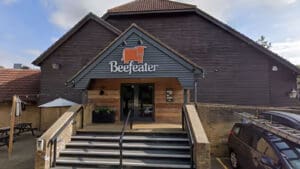
Beefeater will close all 106 of its UK restaurants on Thursday 10 September, owner Whitbread has confirmed, as part of a five-year plan the group says will deliver £250 million of cost savings.
Brewers Fayre’s 89 sites will stop trading after evening service on 7 September. Whitbread’s other branded restaurant formats, Bar + Block, Cookhouse + Pub and Table Table, will close on 3 September.
The FTSE 100 group first set out the restructuring on 30 April, when it said it intended to become a pure-play hotel business focused on Premier Inn.
In a statement published in June, Whitbread said the change “will involve exiting all of our remaining branded restaurants, which trade under brands including Beefeater and Brewers Fayre, a number of which will be converted into approximately 600 additional Premier Inn rooms, with the remainder expected to be sold as going concerns”.
The company said the proposals, which are subject to consultation, “would result in a reduction of around 3,800 roles of a total UK and Ireland workforce of around 30,000”. Whitbread said it recruits around 15,000 people a year and expects “to be able to retain a significant proportion of those affected”, adding that it would look to redeploy as many staff as possible.
The exit follows Whitbread’s Accelerating Growth Plan, announced in 2024, which converted more than 200 branded restaurants into hotel rooms and introduced an integrated restaurant in each hotel. Whitbread said that format “has proved highly popular with guests”.
Searches for “Beefeater UK restaurant shutdown” rose by 5,000 per cent on Google Trends after the closure dates were confirmed.
The closures come as the licensed trade continues to contract. Analysis from CGA by NIQ found the number of licensed premises across the UK fell to 98,609 by the end of March, a net loss of 305 venues since December, with casual dining restaurant numbers down 0.9 per cent in the first quarter.
Richard Hunt, director at Liquidation Centre, said the cost programme showed “a proactive effort to protect the long-term health of the business” but would not resolve the group’s wider trading position on its own.
“While reducing costs can significantly improve resilience during challenging trading conditions, it is not a cure-all,” Hunt said. “Businesses cannot simply cut their way to sustainable growth, they must also continue to attract customers, remain competitive and adapt to changing market trends. If these wider challenges persist, further restructuring may still be required by the company in the future.”
Hunt said closing underperforming sites “can improve the financial health of a business, but it only creates long-term value if the remaining estate is stronger, more profitable and better aligned with what customers want”.
He said maintaining large estates of physical locations had become increasingly challenging for established chains, and that the Beefeater closures “reflect the wider challenges facing the casual dining industry rather than an isolated issue”.
“Many consumers are eating out less frequently due to the cost of living, while those who do are placing greater emphasis on value, quality and the overall dining experience,” Hunt said. “Businesses that fail to evolve alongside these changing expectations risk seeing footfall decline over time and become less profitable.”
Rising food and energy costs, higher employment expenses and inflation had all increased the financial burden on operators, he said. “Even well-known brands are not immune when operating costs continue to outpace revenue growth, making it difficult to sustain less profitable locations.”
Hunt said that for operators under financial pressure, the first priority “should be carrying out a thorough review of income, expenditure and site performance”, and that renegotiating contracts and improving operational efficiency could relieve strain. Where cash flow problems become more severe, he said, early advice from a licensed insolvency practitioner “can help businesses understand their options and, in some cases, avoid formal insolvency proceedings altogether”.
Separate research reported earlier this year found a third of UK hospitality businesses were operating at a loss following April’s tax changes.
“Closures of this scale inevitably have an impact on employees, local communities and loyal customers,” Hunt said. “They also serve as a reminder that even long-established household names cannot afford to stand still.”