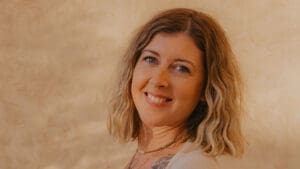
For Fiona McCoss, business is not about hustle culture or rigid corporate structures, it’s about creating sustainable success through intuition, connection, and embodied leadership.
As founder of Wild Feminine Retreats and creator of the Wild Feminine Facilitator Training, she has built a thriving international community supporting women to reconnect with themselves, their bodies, and their creativity. From transformational retreats in Greece and Ibiza to mentoring female entrepreneurs around the world, McCoss has developed a business model rooted in what she calls “feminine business”, one that values nervous system regulation, pleasure, flexibility, and authentic human connection over burnout and one-size-fits-all formulas.
What do you currently do at your business?
My core offerings are my signature Wild Feminine Facilitator Training, one-to-one mentorship, and immersive retreats. Right now, I’m supporting 16 women through the current training cohort while preparing to host retreats in Crete and my online Wild Feminine Solstice Festival, which reaches over a thousand women globally.
No two days are ever the same. One day I may be teaching a masterclass, another focused on strategy, marketing, or client mentorship. What matters most to me is intimacy and genuine connection. I don’t see clients as names on a spreadsheet, I know their stories, their families, their dreams, and often even their pets’ names.
Together, we work on everything from nervous system healing and feminine leadership to pleasure, emotional expression, and business sustainability. My work is centred around helping women reconnect with themselves in a world that often encourages disconnection and over-performance.
Who do you admire?
Honestly, the women I work with who are mothers.
I’m child-free by choice, and I’ve chosen to pour my creative energy into the businesses and communities I’ve built. But I witness every day the depth of work many mothers are doing, not only raising children, but consciously breaking generational patterns and creating emotionally healthier environments for their families.
They’re teaching their children about boundaries, emotional literacy, consent, and self-worth in ways previous generations often didn’t experience. That level of self-awareness, sacrifice, and devotion deserves far more recognition and support than society currently gives it.
Looking back, is there anything you would have done differently?
I probably would have studied business or economics earlier on. When I first started, I had to teach myself everything from scratch and invested heavily in coaches and programmes to understand how to build a sustainable company.
Some of those investments were invaluable. Others weren’t.
What I eventually realised was that many traditional business formulas simply didn’t align with how I wanted to work or live. I had to create my own blueprint, one that balanced success with sustainability and nervous system health.
Personally, I’d also remind myself to enjoy the process more. Entrepreneurship can easily become an endless pursuit of the next milestone. I’m still learning to slow down and appreciate the beautiful moments along the way.
What defines your way of doing business?
The way I run my business is deeply rooted in feminine principles, which looks very different from traditional business culture.
For me, feminine business means working cyclically rather than mechanically. It means understanding energy, nervous system regulation, intuition, pleasure, creativity, and sustainability. I structure my work around what allows me to operate at my best, not around rigid nine-to-five expectations.
It’s also about rejecting performative hustle culture. You won’t find aggressive sales tactics or “bro marketing” here. I believe business can be deeply successful without burnout, urgency, or constant pressure.
My approach blends intuition with strategy. I trust what feels aligned while also applying systems and structure that genuinely support growth. Ultimately, I want to build businesses that support life, not consume it.
What advice would you give to someone starting out?
Get support early and build slowly.
I often describe feminine business as a “slow burn” model. It takes time to build sustainable momentum, but once it’s established, it creates something far more enduring than overnight success culture.
Too many people leave corporate seeking freedom and accidentally recreate the same stress and burnout patterns inside their own businesses. That’s why structure, systems, and support matter so much.
I’d also ask people to be honest with themselves: do you truly have the resilience and vision to build something long-term? Entrepreneurship is incredibly rewarding, but it’s also deeply challenging. Without a strong “why,” it becomes very difficult to stay committed when things get hard.
And finally, don’t let fear stop you. Most people regret the opportunities they didn’t take, not the ones they did.
What are your favourite things to do outside of work? How do you maintain a healthy work/life balance?
Pleasure and spaciousness are priorities in my life, not rewards I “earn” after overworking.
I’ve intentionally designed my business to support balance. I don’t check my phone before 8am or after 7pm, I avoid client calls on Mondays, and I don’t start desk work before 10am. These boundaries allow me to stay regulated, creative, and present.
Outside work, I love gardening, dancing, redecorating our home in Somerset, and spending time outdoors. Earlier this year, my partner and I bought a house in Frome, so I’ve been planting flowers and creating a space that feels nourishing and grounding.
And when I travel for retreats, I always stay a few extra days, preferably near a beach.
Read more:
Getting to Know You: Fiona McCoss, founder of Wild Feminine Retreats